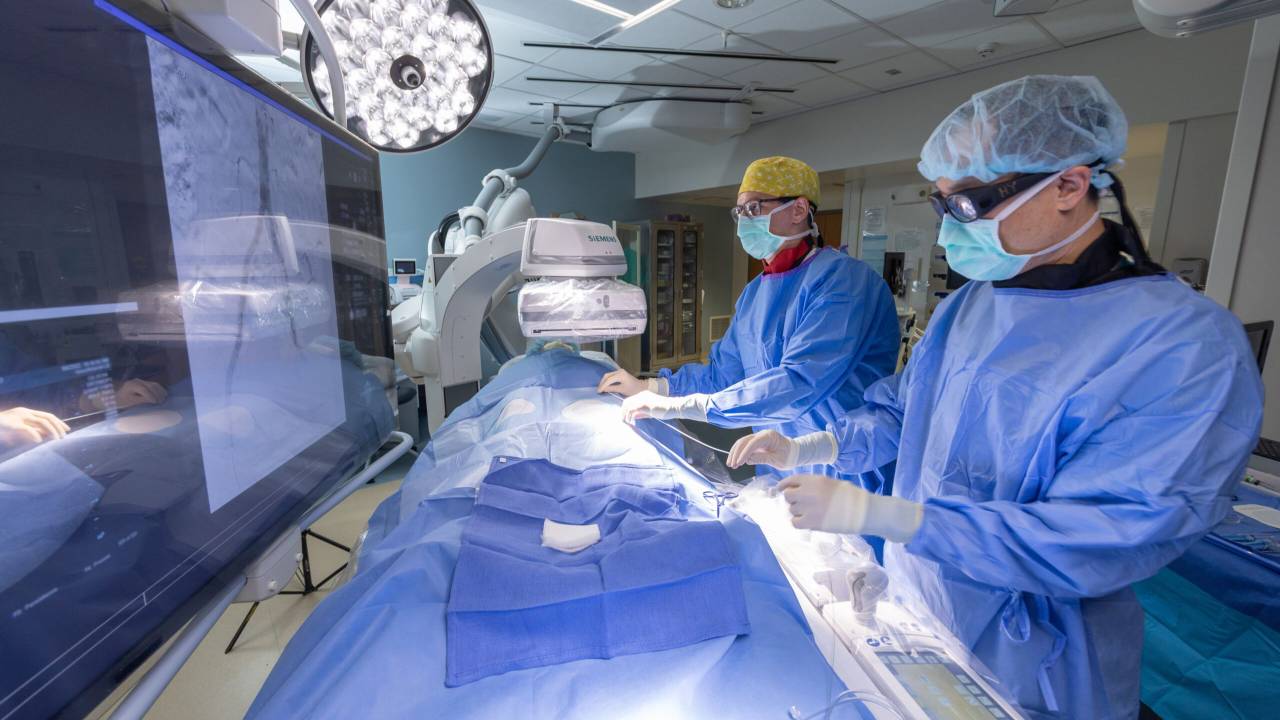
Provocative Mesenteric Angiography from the Author, Dr. Charles Kim from Duke
Provocative Mesenteric Angiography: Safety and Efficacy in Occult GI Bleeding
This episode tackles one of the most frustrating clinical challenges in Interventional Radiology: the patient with a recurrent occult GI bleed who has failed endoscopy and standard imaging. We analyze the largest retrospective cohort study to date (22 years of data) on TPA-based Provocative Mesenteric Angiography (PMA) to determine when to use this aggressive diagnostic maneuver.
-
The Safety Surprise: Despite intentionally provoking bleeding with TPA and Nitroglycerin, the study revealed zero major bleeding adverse events, thanks to "first-pass hepatic metabolism" clearing the drugs before they hit the systemic circulation.
-
The "Secret Sauce" for Selection: We identify the two independent predictors that increase the odds of a positive study by nearly sevenfold:
-
Hematochezia (bright red/maroon stool).
-
A Prior Positive Radiologic Study (CTA or Tagged RBC), even if the bleed appeared to stop.
-
-
The Hard Stop: The data provides a clear exclusion criterion: zero patients with Melena (black tarry stool) and negative prior imaging had a positive PMA result, suggesting these procedures are likely futile.
-
Technical Mastery: Success relies on super-selectivity. Injecting from a distal, third-order vessel yielded a 63.6% positivity rate, compared to just 21.5% from a proximal injection.
Tune in to learn how to safely provoke the bleed on your terms and identify the source when all other methods fail.
Based on comments from experts, content on Wysdom, and the article cited below.
Benvenuti TA, Chisholm M, Cline B, et al. Provocative Mesenteric Angiography for Obscure Gastrointestinal Hemorrhage: An Update on Outcomes, Safety, and Predictors of Success. J Vasc Interv Radiol. 2025;36(10):1558-1566. doi:10.1016/j.jvir.2025.06.022
Featured Commentary: Dr. Charles Kim (Duke University)
We are honored to include exclusive commentary from the study’s senior author and Chief of IR at Duke, Dr. Charles Kim. Dr. Kim provides a candid look at the last-ditch nature of this procedure and the future of the field:
-
A Last-Ditch Essential: Dr. Kim argues that while we may have reached the limit of what retrospective TPA data can tell us, PMA remains a vital tool for "desperate patients" that every major hospital IR team should be comfortable performing.
-
Navigating the TPA Paradox: He acknowledges the "referral friction" IRs often face, as TPA is technically contraindicated in patients with recent GI bleeding. Understanding the safety profile is key to managing these inter-departmental relationships.
-
The CO2 Frontier: Dr. Kim highlights the potential of CO2 Provocative Angiography. While his team currently uses it in their sequence, he notes that the extremely high positivity rates reported in some literature have been difficult to replicate—leaving the door open for future CO2 experts to refine the technique.
Tune in to learn how to safely provoke the bleed on your terms and identify the source when all other methods fail.