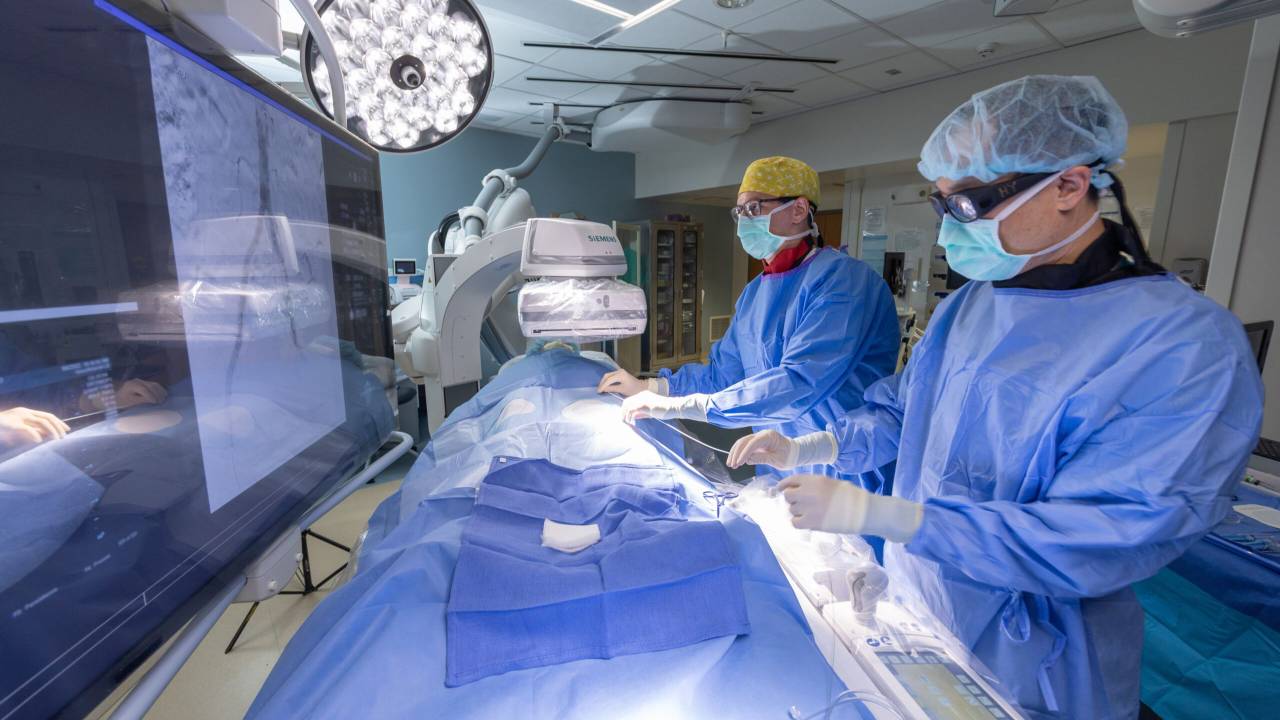
Night Call Tips from Dr. Rusty Hofmann
Dr. Rusty Hofmann, Professor of Interventional Radiology and founder of Wysdom, drops essential night-call wisdom after 25+ years of taking call: when & why to come in, how residents/fellows should present cases, and his famous 6 Cs mnemonic to never forget critical prep at 2–3 AM.
Key takeaways:
- Only come in for life- or limb-threatening emergencies — everything else waits for morning team/staffing
- Perfect case presentation format: Lead with the problem (“GI bleeder in ER, likely needs TIPS”) Then age/sex, vitals (BP 90/60, HR 120), pressor requirements, blood products, and imaging/findings. This gets the attending engaged fast
- The "Rule of 100": if the pulse is >100 or systolic BP is <100, the patient is likely bleeding. However, strongest predictor of finding active extravasation on an angiogram is whether the patient is actively being transfused.
- The 6 Cs checklist (memorize this!):
- Consent – get it signed
- Coags – check INR/PT/PTT
- Creatinine – kidney function for contrast
- Contrast allergy – history? Premed?
- Contraindications – recent surgery, trauma, brain bleed (especially if tPA)
- Can the patient be still? – anesthesia needed? (Most important at night!)
This quick, practical framework has saved countless chaotic night cases. A must-watch for every IR resident, fellow, APP, and attending who takes call.
#IRCall #NightCall #InterventionalRadiology #RustyHofmann #IRtips #6Cs #EmergencyIR #TIPS #GIBleed #StanfordIR #IRad #IRfellow #IRresident #IRcommunity #MedicalEducation #OnCall #Wysdom #IRpearls